There is no legislated expiry for a Verification of Competency, but most WA mine sites, principal contractors and employers expect a VOC issued within the last two years. Always check your site’s specific requirements.
Sale Alert – Earthmoving Courses Now Only $650* | Book Your Spot Today | Explore Courses
| Date | Time | Location | Available Spaces | Cost | |
| 3 September 2026 | 07:30 am - 11:30 am | 107 Radium Street Welshpool | 4 | $320.00 | |
| 17 September 2026 | 07:30 am - 11:30 am | 107 Radium Street Welshpool | 5 | $320.00 | |
| 2 October 2026 | 07:30 am - 11:30 am | 107 Radium Street Welshpool | 5 | $320.00 | |
| 15 October 2026 | 07:30 am - 11:30 am | 107 Radium Street Welshpool | 5 | $320.00 | |
| 29 October 2026 | 07:30 am - 11:30 am | 107 Radium Street Welshpool | 5 | $320.00 | |
| 12 November 2026 | 07:30 am - 11:30 am | 107 Radium Street Welshpool | 5 | $320.00 | |
| 26 November 2026 | 07:30 am - 11:30 am | 107 Radium Street Welshpool | 5 | $320.00 | |
| 10 December 2026 | 07:30 am - 11:30 am | 107 Radium Street Welshpool | 5 | $320.00 | |
| 24 December 2026 | 07:30 am - 11:30 am | 107 Radium Street Welshpool | 5 | $320.00 | |
| 7 January 2027 | 07:30 am - 11:30 am | 107 Radium Street Welshpool | 5 | $320.00 | |
| 21 January 2027 | 07:30 am - 11:30 am | 107 Radium Street Welshpool | 5 | $320.00 | |
| 4 February 2027 | 07:30 am - 11:30 am | 107 Radium Street Welshpool | 5 | $320.00 |
A VOC C2 Slewing Mobile Crane assessment is a theory and practical assessment that confirms you’ve maintained the skills and knowledge behind your existing C2 Slewing Mobile Crane licence.
A VOC (Verification of Competency) C2 Slewing Mobile Crane assessment doesn’t replace your original ticket, it verifies that you’re still competent to use it.
Specifically, this assessment confirms that an individual has maintained the skills and knowledge attained as per Licence to Operate a Slewing Mobile Crane (Up to 20 tonnes) – TLILIC0022 or equivalent.
Many WA mine sites, principal contractors and civil employers require a current VOC commonly one issued within the last two years before you can perform C2 Slewing Mobile Crane work on their site.
You likely need a VOC C2 Slewing Mobile Crane assessment if:
A VOC only verifies an existing qualification. It is not a nationally accredited training that replaces your current C2 Slewing Mobile Crane licence. To be assessed, you must already hold
A valid Licence to Operate a Slewing Mobile Crane (Up to 20 tonnes) – TLILIC0022 and High Risk Work Licence (or equivalent)
If you don’t yet hold a C2 Slewing Mobile Crane licence, a VOC isn’t the right starting point. You’ll need to complete the full C2 Slewing Mobile Crane course first. Before booking, please ensure your high-risk licence hasn’t expired. High Risk Work Licences expire every 5 years, and a VOC can’t be performed on a lapsed licence.
On successful completion participants will receive a VOC (Verification of Competency) Certificate for TLILIC0022 – Licence to Operate a Slewing Mobile Crane (Up to 20 tonnes)
Please refer to our Refund/Cancellation Policy
If you have any physical conditions that may affect your ability to complete a course, please visit a doctor and obtain a “Fit for Work” certificate, and send it to our bookings email. Saferight reserves the right to cancel your enrolment if this documentation is not provided and you are deemed unfit for training. Additionally, cancellation fees will apply if adequate notice is not given.
Up to 4 hours (7:30 AM-11:30 AM)
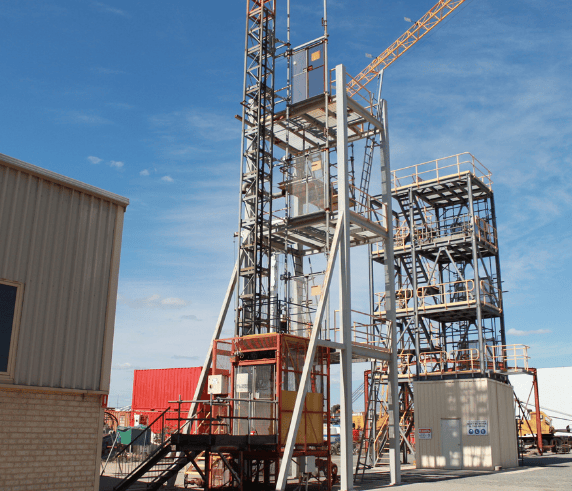
Our VOC C2 Crane course delivered at the following location…
Refer to the price listed in the enrolment table.
Group bookings/Onsite training is available at your site or ours. Please click the ‘Enquire Now’ button for further information on pricing and site requirements.
Effective 25 September 2026, Saferight will no longer charge credit card surcharges, in line with changes introduced by the Reserve Bank of Australia (RBA).
| Date | Time | Location | Available Spaces | Cost | |
| 3 September 2026 | 07:30 am - 11:30 am | 107 Radium Street Welshpool | 4 | $320.00 | |
| 17 September 2026 | 07:30 am - 11:30 am | 107 Radium Street Welshpool | 5 | $320.00 | |
| 2 October 2026 | 07:30 am - 11:30 am | 107 Radium Street Welshpool | 5 | $320.00 | |
| 15 October 2026 | 07:30 am - 11:30 am | 107 Radium Street Welshpool | 5 | $320.00 | |
| 29 October 2026 | 07:30 am - 11:30 am | 107 Radium Street Welshpool | 5 | $320.00 | |
| 12 November 2026 | 07:30 am - 11:30 am | 107 Radium Street Welshpool | 5 | $320.00 | |
| 26 November 2026 | 07:30 am - 11:30 am | 107 Radium Street Welshpool | 5 | $320.00 | |
| 10 December 2026 | 07:30 am - 11:30 am | 107 Radium Street Welshpool | 5 | $320.00 | |
| 24 December 2026 | 07:30 am - 11:30 am | 107 Radium Street Welshpool | 5 | $320.00 | |
| 7 January 2027 | 07:30 am - 11:30 am | 107 Radium Street Welshpool | 5 | $320.00 | |
| 21 January 2027 | 07:30 am - 11:30 am | 107 Radium Street Welshpool | 5 | $320.00 | |
| 4 February 2027 | 07:30 am - 11:30 am | 107 Radium Street Welshpool | 5 | $320.00 |
There is no legislated expiry for a Verification of Competency, but most WA mine sites, principal contractors and employers expect a VOC issued within the last two years. Always check your site’s specific requirements.
All bookings are made online through the website. Open the VOC course page for your machine or licence class, choose an available date and enrol directly on the page.
Most Saferight VOC assessments are completed in a single session. You complete a knowledge (theory) assessment followed by a practical assessment on the machine, and your VOC certificate is issued once your assessment is marked.
A licence or ticket (such as a High Risk Work Licence) is your formal authorisation to perform the work. A Verification of Competency doesn’t replace it — it is an assessment that confirms you have maintained the skills and knowledge behind the licence you already hold. Employers and sites use a current VOC as evidence that you are still competent to operate.
All necessary requirements are detailed in the “Entry Requirements” section above. If you are unsure, please submit a ticket by clicking the “Enquire Now” button.
If you see a green tick under ‘Funding’ at the top of the page and a ‘CTF Funding Available’ box beneath the enrolment table, the course is funded by CTF. If these indicators are absent, the course is not CTF-funded. For more information about CTF, click here.
All courses run at Saferight are Nationally Accredited in Australia, except for permit issuers, Height Safety Supervisor, and courses under the VOC category.
Individuals holding a student visa are not eligible to enrol in, participate in, or attend any of our courses, whether face-to-face or online. Because Saferight is not registered with CRICOS (Commonwealth Register of Institutions and Courses for Overseas Students). Student visa holders are encouraged to seek training with a CRICOS-registered institution to meet their requirements.
Verification of Competency (VOC) is an assessment process used to ensure that a worker can perform their job safely and competently. It is not about teaching new skills, but rather confirming that the person has the knowledge, experience, and ability to carry out specific tasks in line with workplace health and safety standards. VOCs are commonly required in high-risk industries such as construction, mining, oil and gas, and warehousing where operating heavy machinery, working at heights, or managing hazardous environments is part of the job.
Employers have a legal responsibility under Work Health and Safety (WHS) laws to ensure their workers are competent. A VOC assessment provides documented proof of a worker’s ability to perform tasks safely. This reduces the risk of accidents, ensures compliance with regulations, and helps maintain a safe workplace.
A VOC may be required if:
A Verification of Competency is usually conducted by a qualified assessor. The process includes a combination of:
VOC assessments are commonly applied to high-risk work licences and machinery such as:
There is no nationally set expiry date for a VOC. However, many companies and sites have their own policies, often requiring workers to complete a VOC every 2–3 years, or whenever they start a new job. Employers should ensure VOCs remain up-to-date to meet site and safety requirements.
VOC assessments must be carried out by an accredited training organisation with qualified assessors. For workers and employers in Perth and across Western Australia, Saferight provides VOC assessments for a wide range of licences and equipment, ensuring compliance and workplace safety standards are met.
A Verification of Competency is an essential process for maintaining safe and compliant workplaces. It ensures that workers not only hold the right licence or qualification but also demonstrate current, practical ability. Whether you’re an employer needing to verify your team’s skills or a worker wanting to improve your employability, a VOC is the recognised way to prove competency.
Ready to book your Verification of Competency assessment? Explore Saferight’s range of VOC courses here.
Understanding the differences between slewing and non-slewing mobile cranes is essential for choosing the right course and equipment for your needs. At Saferight, we offer a range of mobile crane courses designed to equip you with the necessary skills and knowledge to operate these cranes safely and effectively. In this blog, we will explore the differences between slewing and non-slewing cranes, provide an overview of our mobile crane courses, and guide you on how to enrol.
Mobile crane courses are essential for anyone looking to work in industries that require heavy lifting and material handling. Mobile cranes are versatile pieces of equipment used in various industries for lifting and moving heavy loads. They are broadly classified into slewing and non-slewing cranes based on their boom rotation capabilities. Saferight offers comprehensive training for both types, ensuring you are well-prepared to operate these cranes in real-world scenarios.
A non-slewing crane, also known as a non-rotating or fixed-base crane, is characterised by its inability to rotate the boom around a central axis. Unlike slewing cranes, non-slewing cranes have a fixed boom that can only move up and down, making them simpler and often more cost-effective for specific lifting tasks.
The boom in non-slewing cranes is fixed in one direction and can only be raised or lowered. This limited range of motion makes them ideal for applications where lifting needs are straightforward and within a confined area.
Non-slewing cranes are typically more stable than slewing cranes because their design reduces the risk of tipping over. The fixed boom and limited movement contribute to their stability, making them suitable for use on uneven or rough terrain.
These cranes are often more compact and easier to transport compared to their slewing counterparts. Their simpler design means fewer components, which can translate to lower maintenance costs and easier operation.
Non-slewing cranes are commonly used in industries such as construction, agriculture, and logistics. They are ideal for tasks like loading and unloading materials, lifting heavy objects within a restricted area, and other jobs that don’t require the boom to rotate.
Due to their simpler mechanism and limited range of motion, non-slewing cranes are often less expensive to purchase and maintain. This makes them a cost-effective choice for businesses that need reliable lifting solutions without the added complexity of a slewing crane.
Non-slewing mobile cranes are frequently used for loading and unloading materials. Their ability to pick up loads and carry them to a different location makes them invaluable in warehouses, distribution centres, and construction sites.
These cranes are often employed in assembly and installation tasks. For example, they can lift and position heavy machinery, structural components, or large equipment parts with precision.
In industrial settings, non-slewing mobile cranes assist in maintenance and repair activities. They can lift and transport parts that need servicing, reducing downtime and improving efficiency.
Their primary function as pick-and-carry cranes means they are used to move loads from one part of a job site to another. This is especially useful in scenarios where other means of transport are impractical.
The CN Non-Slewing Mobile Crane course covers the operation of non-slewing cranes in various work environments. This course is ideal for those who need to operate cranes for material handling and other lifting tasks in construction and industrial settings.
Slewing cranes, also known as rotating cranes, can rotate the boom around a central axis, allowing for a full 360-degree movement. This capability provides greater flexibility and reach compared to non-slewing cranes.
The defining feature of a slewing crane is its rotating boom. This boom can turn around a central axis, allowing the operator to lift and place loads anywhere within the crane’s radius without needing to reposition the entire crane.
Slewing cranes are highly versatile and can be used in a wide range of applications, including construction, shipping, and heavy industry. Their ability to rotate makes them ideal for tasks that require precise positioning of materials over a large area.
The rotating boom of a slewing crane can extend horizontally and vertically, providing a wide range of motion. This makes slewing cranes suitable for complex lifting operations where obstacles need to be navigated.
Due to their advanced rotating mechanism, slewing cranes are more complex and require sophisticated control systems. Operators need to be well-trained to handle the crane’s movements safely and effectively.
Slewing cranes are commonly used on construction sites, in shipyards, and for infrastructure projects. They are essential for tasks that involve lifting heavy materials to high elevations or moving them horizontally across a job site.
While slewing cranes offer greater flexibility and reach, they are typically more expensive to purchase and maintain compared to non-slewing cranes. Their complexity and additional moving parts require regular maintenance and skilled operation.
Slewing mobile cranes are extensively used in constructing skyscrapers and other tall structures. Their ability to manoeuvre heavy materials to significant heights is invaluable.
These cranes are essential for lifting and positioning large bridge segments, facilitating the construction of both small and large-scale bridges.
From small residential buildings to large commercial complexes, slewing mobile cranes are indispensable for various lifting tasks, such as placing steel beams, concrete panels, and prefabricated components.
In manufacturing settings, slewing mobile cranes are used to lift and move heavy machinery and equipment, ensuring efficient production processes.
These cranes are vital for installing and maintaining heavy components like turbines, generators, and other machinery in power plants, including nuclear, thermal, and hydroelectric facilities.
Slewing mobile cranes play a significant role in the construction and maintenance of roads and highways, assisting in the placement of heavy barriers, signage, and bridge components.
These cranes are used for laying tracks, positioning large segments of railway infrastructure, and maintenance tasks.
In shipyards, slewing mobile cranes are essential for assembling and repairing ships, handling heavy parts like hull sections, engines, and other components.
These cranes are used on offshore platforms to handle equipment and materials needed for drilling operations.
In mining operations, slewing mobile cranes are used to move heavy equipment, load materials onto transport vehicles, and facilitate the maintenance of large machinery.
The CO Slewing Mobile Crane course provides comprehensive training on operating slewing cranes with a capacity of over 100 tonnes. This course is designed for those involved in large-scale lifting operations.
The C1 Slewing Mobile Crane course focuses on cranes with a capacity of up to 100 tonnes. This training is essential for operators working in construction and industrial projects.
The C6 Slewing Mobile Crane course is tailored for cranes with a capacity of up to 60 tonnes. It covers all aspects of crane operation, from planning to execution.
Completing a mobile crane course at Saferight can significantly boost your career prospects. The skills and knowledge gained are highly valued in the industry, and employers often seek individuals with these certifications for key roles.
Our courses provide hands-on training with real-life scenarios, ensuring that participants are well-prepared to handle actual crane operations. The practical approach helps build confidence and competence in dealing with high-pressure situations.
Saferight’s courses are widely recognised within the industry, making them a valuable addition to your professional credentials. Our certifications demonstrate your commitment to safety and your ability to manage crane operations effectively.
Enrolling in Saferight’s mobile crane courses is straightforward. You can choose to enrol in any of the specific courses mentioned above based on your needs and career goals.
Explore our full range of mobile crane courses and take the first step towards mastering crane operations. Enhance your skills, boost your career, and ensure safety in your workplace by enrolling in Saferight’s comprehensive training programs.
In the realm of heavy lifting and material handling, both slewing and non-slewing cranes play crucial roles, each with its unique advantages. Slewing cranes, with their ability to rotate a full 360 degrees, offer unparalleled flexibility and precision, making them ideal for complex construction projects and tight spaces where precise positioning is critical. Non-slewing cranes excel in their simplicity, mobility, and compact design, making them the go-to solution for straightforward lifting and transport tasks.
By understanding the distinct benefits of slewing and non-slewing cranes, industry professionals can select the most appropriate equipment for their specific needs. Leverage the efficiency and capabilities of each type to optimise operations, improve efficiency, and ensure successful project completion.
For more information on crane operations and safety regulations, visit:

Crane operations are a critical aspect of various industries, including construction, manufacturing, logistics, and more. To ensure safe and efficient crane operations, it is essential to undergo proper training and obtain the necessary certifications. Saferight offers a wide range of crane courses designed to equip you with the skills and knowledge needed to operate different types of cranes. In this blog, we will provide an overview of all crane courses available at Saferight.
Crane courses are designed to train individuals on the safe and efficient operation of various types of cranes. These courses cover everything from basic crane operation to advanced techniques and safety protocols. Saferight offers comprehensive training programs that cater to different levels of experience and specific crane types.
The C6 Slewing Mobile Crane course is tailored for cranes with a capacity of up to 60 tonnes. It covers all aspects of crane operation, from planning to execution.
Participants must hold a current Statement of Attainment/Qualification for CPCCLDG3001 – Licence to Perform Dogging before attending this course. While this is not an industry requirement, Saferight requires all students who want to enrol into a crane course to possess a Dogging ticket.
This is crucial because crane operators must follow instructions from the Dogman. Without knowledge of Dogging or the role of a Dogman, a crane operator may not be able to assess whether the Dogman is performing the job correctly, which could lead to dangerous situations.
C6 crane operators in Australia are highly skilled professionals responsible for operating cranes with a capacity of up to 60 tonnes. Due to the critical nature of their work, which involves lifting and moving heavy loads in construction, mining, and other industrial sectors, they are well-compensated.
On average, C6 crane operators can expect to earn between $85,000 to $120,000 annually, or about $45 to $65 AUD per hour, depending on factors such as experience, location, and the complexity of the projects they work on. Those with extensive experience or who work in remote or high-demand areas may earn even higher salaries, reflecting the vital role they play in maintaining safety and efficiency on job sites.
The C1 Slewing Mobile Crane course focuses on cranes with a capacity of up to 100 tonnes. This training is essential for operators working in construction and industrial projects.
Before attending this C1 crane course, participants must hold a current Statement of Attainment/Qualification for:
While these are not industry-wide requirements, Saferight mandates that all students enrolling in a crane course possess these qualifications. Additionally, having current industry experience of operating a slewing mobile crane greater than 20 tonnes and up to 60 tonnes for at least 2 years will be highly beneficial.
Furthermore, the C1 licence covers cranes with a capacity of up to 100 tonnes. If a participant cannot competently operate a C6 crane, which handles up to 60 tonnes, they are unlikely to manage the complexities of operating larger cranes safely and effectively.
C1 crane operators in Australia are well-compensated for their expertise in operating cranes with a capacity of up to 100 tonnes. On average, C1 crane operators can earn between $90,000 to $130,000 per year, depending on factors such as experience, location, and the specific industry in which they work.
Those with extensive experience or who work in remote, high-demand areas, such as mining or large-scale construction projects, can potentially earn even higher salaries. The role is critical in ensuring the safe and efficient operation of heavy lifting equipment, making it a well-respected and financially rewarding career in the heavy equipment industry.
The CO Slewing Mobile Crane course provides comprehensive training on operating slewing cranes with a capacity of over 100 tonnes. This course is designed for those involved in large-scale lifting operations.
Same like the C1 crane, before attending this CO crane course, participants must hold a current Statement of Attainment/Qualification for:
While these are not industry-wide requirements, Saferight mandates that all students enrolling in a crane course possess these qualifications. Additionally, having current industry experience of operating a slewing mobile crane greater than 20 tonnes and up to 60 tonnes for at least 2 years will be highly beneficial.
On average, CO crane operators can earn between $135,000 to $150,000 AUD per year, depending on factors such as experience, location, and the specific industry in which they work. CO crane operators are paid more than C6 and C1 crane operators because they can handle larger loads and more complex operations. Holding a CO licence means that an operator is also qualified to operate C6 and C1 cranes, adding to their versatility and earning potential.
Those with extensive experience or who work in remote, high-demand areas, such as mining or large-scale construction projects, can potentially earn even higher salaries. The role is critical in ensuring the safe and efficient operation of heavy lifting equipment, making it a well-respected and financially rewarding career in the heavy equipment industry.
The CN crane, commonly known as a Franna crane, stands out as a reliable and efficient tool as a Franna crane, stands out as a reliable and efficient tool for lifting loads exceeding 3 tonnes. The term “CN crane” refers to a non-slewing mobile crane, which is an essential piece of equipment for a variety of lifting tasks, particularly in environments where space is limited or maneuverability is key.
Before attending this CN crane course, participants must hold a current Statement of Attainment/Qualification for:
While these are not industry-wide requirements, Saferight mandates that all students enrolling in a crane course possess these qualifications. As mentioned above, possessing a Dogging ticket is crucial because crane operators must follow instructions from the Dogman. Without knowledge of Dogging or the role of a Dogman, a crane operator may not be able to assess whether the Dogman is performing the job correctly, which could lead to dangerous situations.
On average, CN crane operators or Franna crane operators can earn between $65-$80 AUD per hour. Earnings can vary based on factors such as experience, location, and the specific industry. Operators who also hold additional qualifications, such as a Dogging ticket and a Rigging ticket, often command higher rates, reflecting their broader skill set and increased value on the job site.
A tower crane is a type of fixed crane that is mounted on a steel tower, allowing it to reach impressive heights while maintaining stability and lifting capacity. Unlike mobile cranes, tower cranes are anchored to the ground (or sometimes mounted on buildings) and can extend their reach horizontally through a jib, which is the long arm of the crane that extends out from the tower.
At Saferight, the Tower crane course will specifies the outcomes required to operate a tower crane for licensing purposes, and covers a jib or boom/job crane mounted on a tower structure, demountable or permanent, including both horizontal and luffing jib types.
Before attending this Tower Crane course, participants must hold a current Statement of Attainment/Qualification for CPCCLDG3001 – Licence to Perform Dogging.
On average, Tower crane operators can earn around $90,896 AUD to $96,408 AUD per year in Australia. Earnings can vary based on factors such as experience, location, and the specific industry.
Vehicle loading cranes are used to load and unload materials from vehicles. These cranes are mounted on trucks or trailers and provide the flexibility needed for various loading tasks.
The Vehicle Loading Crane course or also known as CV crane ticket, covers the operation of cranes mounted on vehicles. This training is essential for those involved in logistics and material handling, or people seeking work in operational roles in the mining and construction industries who are required to operate a vehicle loading crane with 10 metre tonnes.
Before attending this Tower Crane course, participants must hold a current Statement of Attainment/Qualification for CPCCLDG3001 – Licence to Perform Dogging.
On average, CV crane operators can earn around $36 to $45 AUD per hour in Australia. Earnings can vary based on factors such as experience, location, and the specific industry.
Completing a crane course at Saferight can significantly boost your career prospects. The skills and knowledge gained are highly valued in the industry, and employers often seek individuals with these certifications for key roles.
Our courses provide hands-on training with real-life scenarios, ensuring that participants are well-prepared to handle actual crane operations. The practical approach helps build confidence and competence in dealing with high-pressure situations.
Saferight’s courses are widely recognised within the industry, making them a valuable addition to your professional credentials. Our certifications demonstrate your commitment to safety and your ability to manage crane operations effectively.
Enrolling in Saferight’s crane courses is straightforward. You can choose to enrol in any of the specific courses mentioned above based on your needs and career goals.
Explore our full range of crane courses and take the first step towards mastering crane operations. Enhance your skills, boost your career, and ensure safety in your workplace by enrolling in Saferight’s comprehensive training programs.
Crane operations are crucial for various industries, and proper training is essential to ensure safety and efficiency. Saferight offers a comprehensive range of crane courses designed to meet the needs of different industries and crane types. Whether you are looking to operate slewing mobile cranes, non-slewing mobile cranes, tower cranes, or vehicle loading cranes, Saferight has the right course for you.
For additional information on crane safety and regulations, visit:
If you have any questions related to the VOC C2 Crane Ticket Perth (Up To 20 Tonnes) please click the enquiry form button